Introduction
In industries where temperature-sensitive products are involved, even a small failure can lead to serious consequences.
A shipment may arrive on time.
The packaging may look perfect.
The delivery process may appear smooth.
But if the required temperature was not maintained during storage or transit, the product may already be damaged — without any visible signs.
This is the reality of cold chain operations.
Cold chain failures are silent. They don’t always show immediate warning signs, but their impact is always costly.
Businesses dealing with:
- Pharmaceuticals
- Vaccines
- Dairy products
- Frozen foods
- Chemicals
face a constant challenge:
Maintaining the right temperature at every stage — from storage to transportation to final delivery.
Without proper monitoring, this becomes nearly impossible.
This is where cold chain monitoring systems come in.
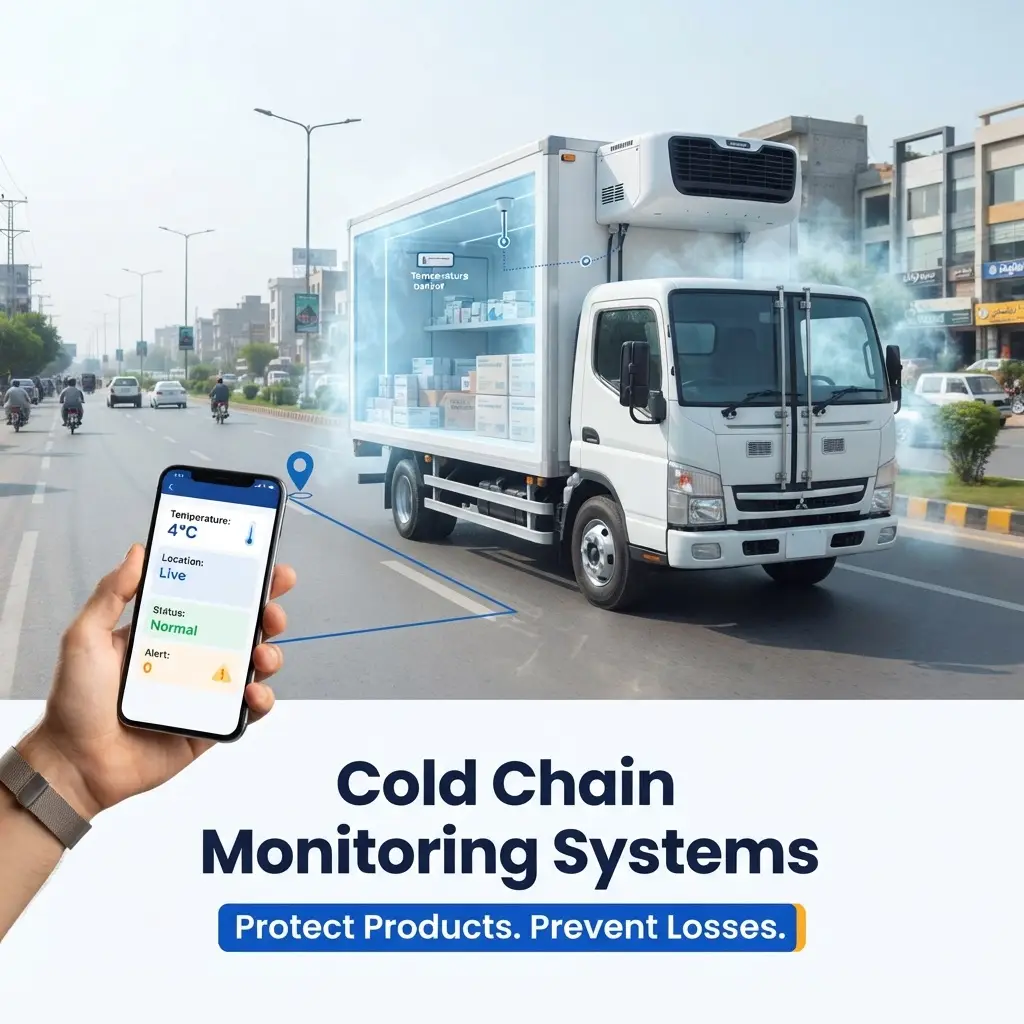
These systems provide real-time visibility, instant alerts, and complete control over temperature conditions, helping businesses prevent losses before they happen.
What Is a Cold Chain Monitoring System?
A cold chain monitoring system is a technology solution designed to continuously track temperature conditions of sensitive products throughout their journey.
It combines:
- Temperature sensors
- GPS tracking systems
- Data communication (GSM/IoT)
- Monitoring software
Instead of relying on manual checks, businesses can monitor conditions in real time.
This allows them to:
- Track temperature continuously
- Detect fluctuations instantly
- Receive alerts when thresholds are crossed
- Maintain records for compliance
In simple terms, it transforms cold chain management from manual monitoring to intelligent control.
Why Cold Chain Monitoring Is More Important Than Ever
?
The need for cold chain monitoring is increasing due to several factors.
1. Growing Demand for Temperature-Sensitive Products
Industries such as pharmaceuticals and food delivery are expanding rapidly in Pakistan.
These industries depend heavily on temperature control.
Even slight variations can affect:
- Product quality
- Safety
- Effectiveness
2. Strict Regulatory Requirements
Many industries must comply with strict standards.
For example:
- Vaccines must be stored within specific temperature ranges
- Food products must meet safety regulations
Without proper monitoring, businesses risk non-compliance.
3. High Financial Risk
Cold chain failures result in:
- Product spoilage
- Wasted logistics costs
- Re-delivery expenses
These losses can significantly impact profitability.
4. Customer Expectations
Customers expect high-quality products.
A single failure can damage brand reputation.
Common Causes of Cold Chain Failures
Understanding the causes is the first step toward prevention.
Temperature Fluctuations
Temperature may rise or fall due to:
- Poor insulation
- Frequent door openings
- External weather conditions
Equipment Failure
Refrigeration units can fail due to:
- Technical faults
- Lack of maintenance
- Power issues
Power Outages
In Pakistan, power interruptions are common.
Without backup systems, temperature control can be lost quickly.
Human Error
Manual processes increase the risk of mistakes, such as:
- Incorrect temperature settings
- Failure to monitor conditions
Delays in Transportation
Long transit times can disrupt temperature stability.
How Cold Chain Monitoring Systems Work?
Modern systems follow a structured process.
Step 1: Sensor Installation
Temperature sensors are installed inside:
- Refrigerated vehicles
- Storage units
- Containers
These sensors continuously measure temperature.
Step 2: Data Transmission
The sensors send data through:
- GSM networks
- IoT communication systems
Step 3: Monitoring Dashboard
Managers can view real-time data through:
- Mobile apps
- Web dashboards
They can monitor:
- Temperature levels
- Location of shipment
- System status
Step 4: Automated Alerts
If temperature crosses defined limits, the system sends instant alerts.
This allows immediate action.
Step 5: Data Logging
All data is stored for:
- Compliance
- Reporting
- Analysis
Key Features of Modern Cold Chain Monitoring Systems
Real-Time Temperature Monitoring
Continuous tracking ensures no gaps in data.
GPS Tracking Integration
Businesses can monitor both:
- Location
- Temperature
Instant Alerts
Immediate notifications help prevent losses.
Data Logging and Reporting
Maintain detailed records for audits and compliance.
Remote Access
Monitor operations from anywhere.
Multi-Device Support
Manage multiple vehicles and storage units from one platform.
Benefits of Cold Chain Monitoring Systems
1. Prevention of Product Loss
Real-time alerts allow businesses to take action before products are damaged.
2. Improved Product Quality
Maintaining consistent temperature ensures quality.
3. Regulatory Compliance
Accurate data helps meet legal requirements.
4. Cost Savings
Preventing spoilage reduces losses.
5. Increased Transparency
Businesses have complete visibility over operations.
6. Better Decision Making
Data-driven insights improve planning and execution.
Real-World Impact on Businesses
Companies using cold chain monitoring systems experience:
- Reduced product spoilage
- Improved operational efficiency
- Better delivery performance
- Increased customer trust
Why Manual Monitoring Is No Longer Reliable
Traditional methods include:
- Manual temperature checks
- Paper-based logs
- Periodic inspections
These methods have major limitations:
- They are not continuous
- They depend on human accuracy
- They cannot detect real-time issues
Modern systems eliminate these risks by providing continuous monitoring.
Cold Chain Challenges in Pakistan
Pakistan presents unique challenges:
High Temperatures
Extreme heat increases the risk of temperature fluctuations.
Power Issues
Frequent outages affect refrigeration systems.
Long Transportation Routes
Products often travel long distances, increasing risk.
Infrastructure Limitations
Inconsistent infrastructure can impact delivery conditions.
Because of these challenges, cold chain monitoring systems in Pakistan are not just helpful — they are essential.
Integration with Other Monitoring Solutions
Cold chain monitoring becomes more powerful when integrated with:
GPS Tracking Systems
Track both location and temperature in real time.
Fleet Management Systems
Improve delivery efficiency and coordination.
Generator Monitoring Systems
Ensure backup power reliability.
This integration creates a complete monitoring ecosystem.
Choosing the Right Cold Chain Monitoring System
When selecting a system, businesses should consider:
Accuracy
Temperature readings must be precise.
Reliability
System should work consistently without failure.
Real-Time Alerts
Immediate notifications are critical.
Data Storage
Records should be easily accessible.
Support
Local support ensures quick issue resolution.
Why Tracking World Is a Reliable Choice
For businesses looking for reliable cold chain monitoring systems in Pakistan, choosing the right provider is critical.
Tracking World offers:
- Real-time temperature monitoring
- GPS-integrated tracking
- Instant alert systems
- Data logging and reporting
- Strong local support
Their solutions are designed to handle real-world challenges in Pakistan, ensuring product safety and operational efficiency.
The Future of Cold Chain Monitoring
The industry is evolving with:
- IoT-based smart sensors
- AI-driven analytics
- Predictive monitoring
- Automated control systems
Future systems will not just detect problems — they will prevent them automatically.
Common Mistakes to Avoid
- Relying on manual monitoring
- Ignoring alert notifications
- Choosing low-quality systems
- Not training staff properly
Conclusion
Cold chain failures are silent, but their impact is significant.
Without proper monitoring, businesses risk:
- Product damage
- Financial losses
- Compliance issues
- Customer dissatisfaction
A cold chain monitoring system provides:
- Real-time visibility
- Temperature control
- Risk prevention
- Operational efficiency
In today’s environment, it is not optional.
It is essential.
Businesses that invest in proper monitoring systems protect not only their products — but their reputation and long-term success.